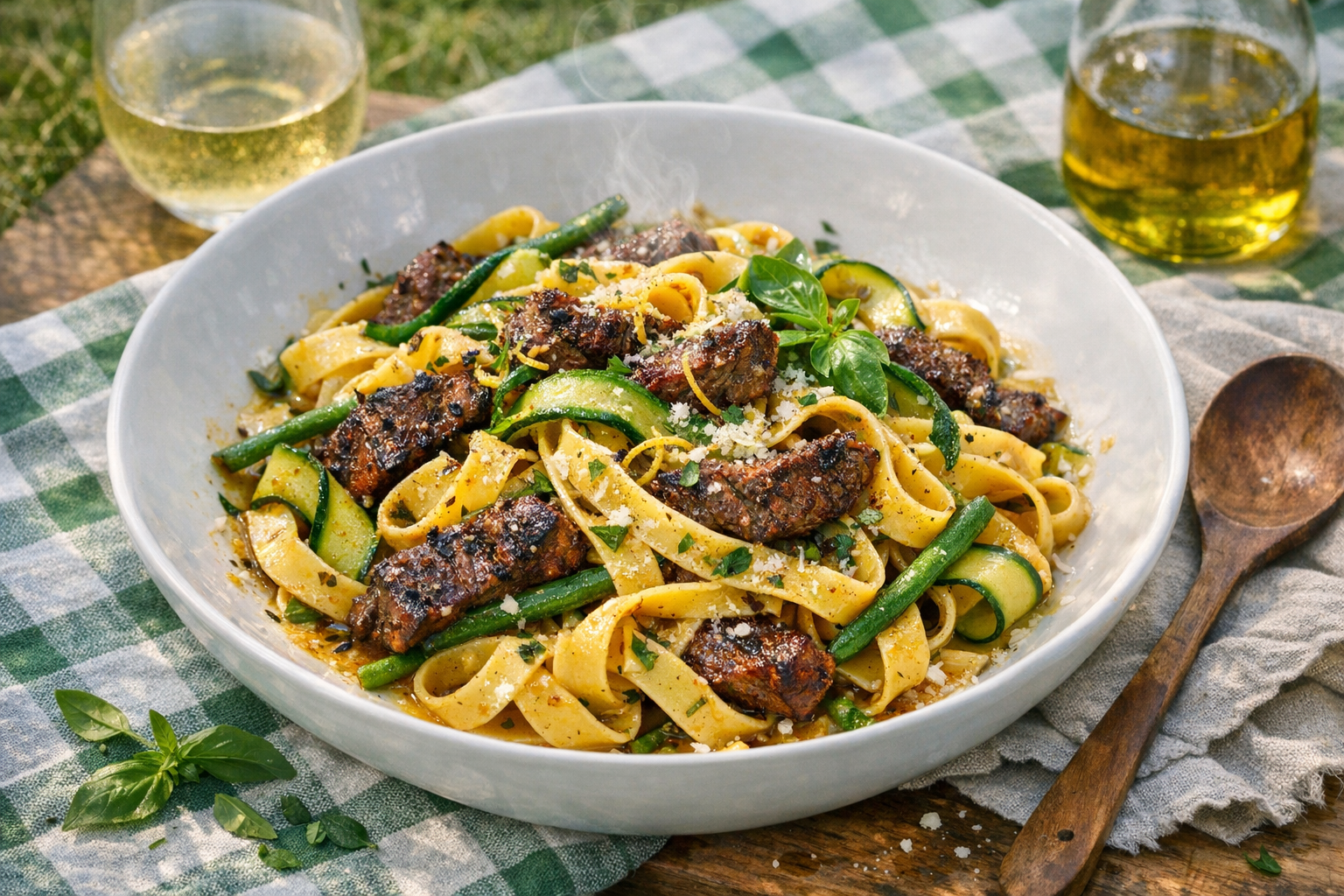
Fireworks and Aftershocks Marinated Beef Tagliatelle
A quick Dijon-Worcestershire marinade brings weeknight fireworks: seared, juicy beef tossed with silky tagliatelle, zucchini, green beans, and tomatoes, brightened with lemon and basil. Built fast, it holds up to the heat.
The phrase storms, sweat and fire set the tone: hot pans, quick sears, and a lively marinade that brings crackling energy to a summer plate. With festivities upended and the Brooklyn Bridge briefly ablaze, I wanted a dish that bridges smoky sear and cool herb brightness, something you can rally around at the table even when plans change. Al dente pasta gives the structure you can trust, a little nod to how integrity matters when the ground shifts. A glaze that reduces safely in the pan echoes fireworks over the Hudson River, while crisp-tender green beans and zucchini ribbons speak to July markets from Brussels to Bruges. Lemon and basil keep things clear-sky bright, even as the sauce carries aftershocks of umami and heat. It is a fast build with care: fond scraped up like a good rescue, details not ignored. Eat it outside if the weather cooperates; inside if not. Inspired by America Marks Its 250th Birthday With Storms, Sweat and Fire and Years of Warnings About Public Housing Preceded Venezuela's Earthquakes.
Instructions
- Marinate the beef: In a medium bowl, whisk the soy sauce, Worcestershire, red wine vinegar, Dijon, brown sugar, the 2 cloves grated garlic, and 15 ml olive oil until the sugar dissolves. Add the beef slices, toss to coat, press into a mostly even layer, and marinate 25-30 minutes (refrigerate if marinating longer than 20 minutes). Meanwhile, bring a large pot with about 3 liters of water to a boil.
- Mise en place: Shave the zucchini into ribbons and set in a colander; sprinkle with a small pinch of the seasoning salt and let drain 10 minutes, then pat dry with paper towels. Trim and halve the green beans. Core and thinly slice the red pepper. Core, deseed, and dice the tomatoes to 1 cm. Prepare the garlic as noted. Zest the lemon, then juice it (you will use both). Tear the basil, chop the parsley, and grate the cheese. Place a heatproof measuring cup near the stove for reserving 180 ml pasta water.
- Blanch the beans: When the water boils, add 30 g fine sea salt, then the green beans. Cook 3 minutes until bright green and crisp-tender. Scoop out with a spider to a colander and run under cold water; drain well and pat dry.
- Cook the pasta: Return the pot to a boil and add the tagliatelle. Cook 8-10 minutes until just shy of al dente (it will finish in the sauce). Reserve 180 ml pasta water, then drain.
- Sear the beef: Heat a large cast-iron or heavy skillet over high heat until lightly smoking, 2-3 minutes. Add the sunflower oil. Lift the beef from the marinade, letting excess drip back; quickly pat the slices dry with paper towels for better browning. Sear in 2 batches, 60-90 seconds per side, until deeply browned at the edges but still rosy inside. Transfer to a warm plate, season with 1/4 tsp of the seasoning salt and 1/4 tsp black pepper, and tent loosely with foil to rest 5 minutes.
- Reduce the marinade: Reduce the skillet heat to medium. Carefully pour in the remaining marinade and boil 60-90 seconds, scraping up fond, until syrupy and bubbling vigorously.
- Build the sauce and vegetables: Add the sliced garlic and red pepper to the skillet and cook 2-3 minutes, stirring, until the pepper softens at the edges and the garlic smells nutty (do not let it scorch). Add the tomatoes, butter, red pepper flakes, and 60 ml reserved pasta water. Simmer 2-3 minutes until the tomatoes just slump and the sauce looks glossy and lightly thickened. Add the blanched beans and zucchini ribbons, season with 1/2 tsp of the seasoning salt, and toss 1 minute so the zucchini bends but stays crisp.
- Finish the pasta: Add the drained tagliatelle, lemon juice, and 30 ml extra-virgin olive oil. Toss vigorously, adding splashes of the remaining pasta water as needed to create a silky, lightly saucy coating. Stir in 25 g Parmigiano, half the basil, and all the parsley. Taste; add the remaining 1/4 tsp seasoning salt if needed.
- Return the beef: If any slices are large, cut into bite-size pieces. Add the beef and its resting juices to the pasta off the heat and toss 30 seconds. Cover the pan and rest 2 minutes so carry-over heat warms the beef without overcooking and the pasta absorbs flavor.
- Serve: Twirl the pasta into warm bowls. Top with the remaining Parmigiano and basil and scatter over the lemon zest. Finish with a crack of black pepper and a few drops of the remaining olive oil. Serve immediately while edges are still steaming and glossy.