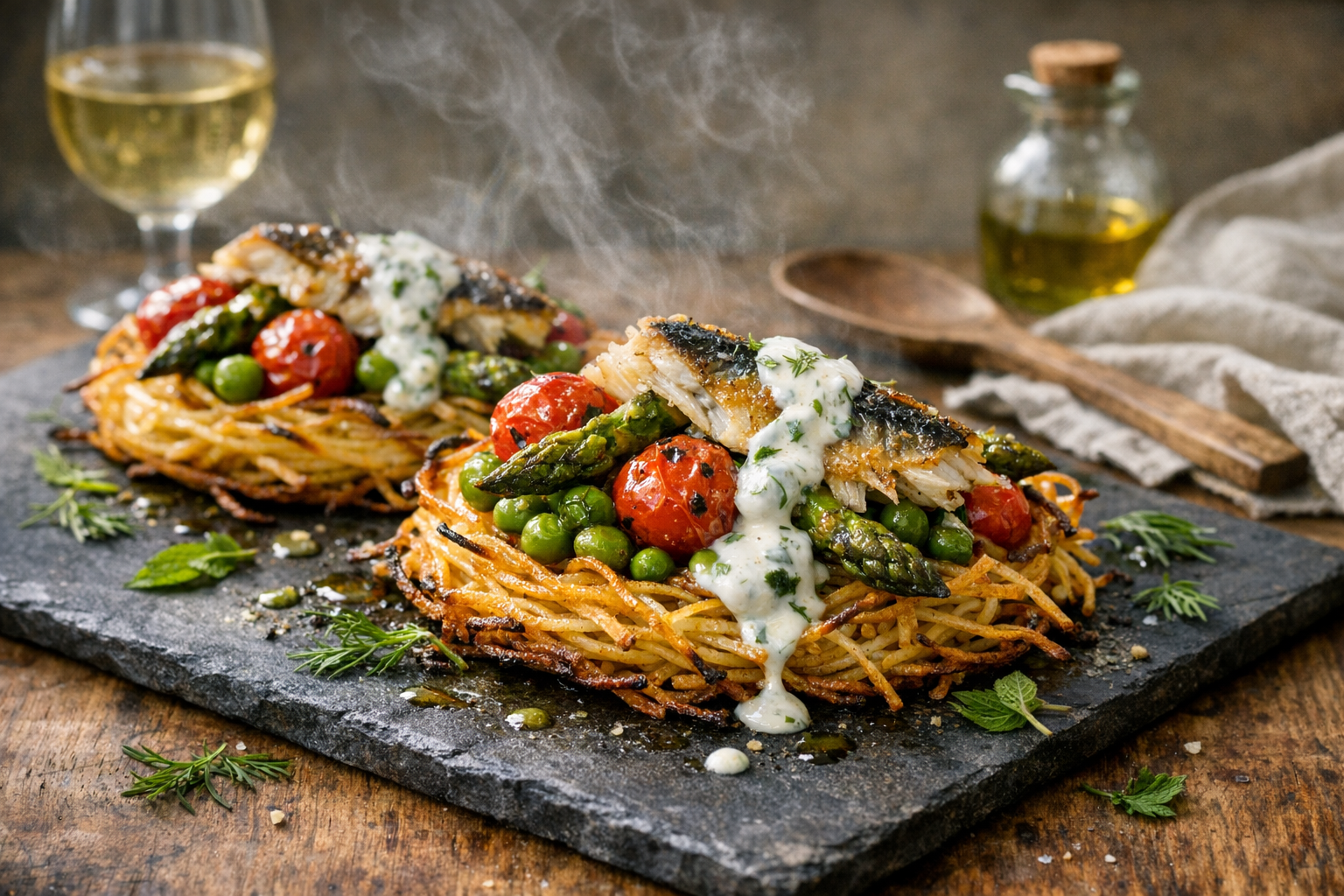
Roasted mackerel and June veg on crispy spaghetti nests with dill-mint yogurt
Belgian June produce shines in this snack: quick-roasted mackerel with blistered cherry tomatoes, tender asparagus and sweet peas, piled into crisp-edged spaghetti nests and finished with a cool dill-mint yogurt. The sheet-pan roast concentrates flavor while the nests bake up bronzed and hand-holdable, perfect for sharing with drinks on a long, light evening.
June sits at a turning point: school years wind down and early summer vegetables peak. I wanted a portable, morale-boosting bite for staff rooms and backyard tables alike, built on budget-friendly fish and bright greens. Coiled spaghetti nests nod to the power bound up in hair and identity, while a hot, efficient roast echoes the hum of new infrastructure reshaping rural life. Mackerel is plentiful in North Sea markets and takes beautifully to high heat, throwing off savory juices that season the vegetables and keep the pasta centers tender. The result is generous yet thrifty, with enough make-ahead flexibility to suit time-pressed teachers and weeknight cooks. A lemony herb yogurt cools the roast and adds lift without fuss, and the whole tray feels right for early-summer Belgium: peas popping, asparagus sweet, tomatoes just starting to sing. Inspired by https://www.nytimes.com/2026/06/23/us/politics/supreme-court-inmates-dreadlocks.html and https://www.nytimes.com/2026/06/23/us/louisana-teachers-bonus-meta-tax-revenue.html.
Instructions
- Mise en place: Heat oven to 220 C (425 F). Lightly oil a standard 12-cup muffin tin (use 15 ml olive oil). Line a large baking tray with parchment. Bring 1.5 liters water to a boil in a medium pot and add 15 g fine sea salt.
- Cook the pasta: Boil the spaghetti 8 minutes until just shy of al dente. Drain thoroughly, return to the warm pot, and let steam off 2 minutes. Toss with 2 tsp olive oil, then cut the pile once or twice with scissors to create shorter lengths for nesting. Cool 5 minutes so the eggs will not scramble later.
- Start the roast: On the lined tray, toss cherry tomatoes, asparagus and peas with 15 ml olive oil, the grated garlic, 0.5 tsp fine sea salt and 0.25 tsp black pepper. Spread in an even layer and roast 8 minutes until tomatoes begin to blister.
- Season and add fish: Pat mackerel dry again. Sprinkle with 0.25 tsp fine sea salt and 0.25 tsp black pepper. Scoot vegetables to make space and lay fillets skin-side up on the tray. Roast 8-10 minutes more until the fish is just opaque and flakes with gentle pressure (52-54 C at the thickest point if using a thermometer). Remove and rest 5 minutes; the carry-over heat will finish the centers. Flake fish into large moist pieces and reserve any pan juices.
- Lower oven to 200 C (400 F).
- Make the nest mixture: In a large bowl, whisk the eggs, Parmesan, panko, lemon zest, spring onions, 0.5 tsp fine sea salt and 0.25 tsp black pepper until combined. Add the cooled spaghetti and toss thoroughly to coat every strand.
- Form the nests: Divide the spaghetti mixture among the 12 oiled muffin cups (about 30 g cooked pasta per cup). Twirl with a fork to create a small well in the center of each. Spoon in a heaped teaspoon of roasted vegetables and a few flakes of mackerel, then drizzle each cup with 1 tsp of the reserved pan juices, if available.
- Bake 14-17 minutes, rotating the tin once, until edges are deep golden and the centers are set and slightly springy. Rest 5 minutes in the tin to firm up, then run a thin knife around each and lift out.
- Make the herb yogurt while the nests bake: In a small bowl, stir the yogurt with 1 tbsp fresh lemon juice, chopped dill and mint, 0.25 tsp fine sea salt and 1-2 tsp water to reach a spoonable drizzle. Let stand 10 minutes for the herbs to bloom.
- Finish and serve: Pile the remaining roasted vegetables and mackerel flakes over the nests. Drizzle with the herb yogurt, grate a little extra lemon zest over, and add a squeeze more lemon juice from the remaining juice. Scatter with dill fronds and mint leaves. Serve warm or at room temperature; they stay crisp for about 30 minutes and are excellent within 60 minutes of baking.